
Introduction
Most service business websites don’t fail because the design looks bad.
They fail because the structure is unclear.
Visitors land on a homepage and can’t immediately answer simple questions:
What do you do?
Do you serve my area?
How do I contact you?
Why should I trust you?
When those answers aren’t obvious, visitors leave — even if the website looks professional.
This isn’t a design problem.
It’s a structure problem.
The Real Problem: Decorative Websites
Many websites are built like brochures.
They focus on:
• Big images
• Generic headlines
• Long paragraphs
• Vague service lists
What they lack is hierarchy.
A service website should guide someone from uncertainty to action. Most don’t.
They present information. They don’t create clarity.
Common Structural Mistakes
Across different industries, the same patterns appear.
No clear service hierarchy
Everything is listed equally, so nothing stands out.
No location clarity
Visitors don’t know if you serve their area – something structured website systems solve by design → Website Systems category
Weak calls to action
Contact buttons exist, but they aren’t placed intentionally.
No proof near decision points
Testimonials are buried instead of reinforcing trust.
Static pages that are hard to update
Businesses stop maintaining the site because changes feel difficult.
Why Structure Matters More Than Design
Structure determines how quickly someone understands your business.
A well-structured website:
• Explains services in a predictable way
• Filters enquiries automatically
• Highlights trust signals at the right time
• Makes updates simple
• Supports growth without redesign
Design supports the structure. It can’t replace it.
The Shift: Website → System
The biggest change small businesses can make is treating their website as a system rather than a page.
A website system includes:
• A clear service framework
• Repeatable page layouts
• CMS-driven content
• Service area logic
• Lead capture flow
You can see examples of these systems across Webberdoo website templates → Website Systems category
This turns the site into part of operations, not just marketing.
How Structured Templates Help
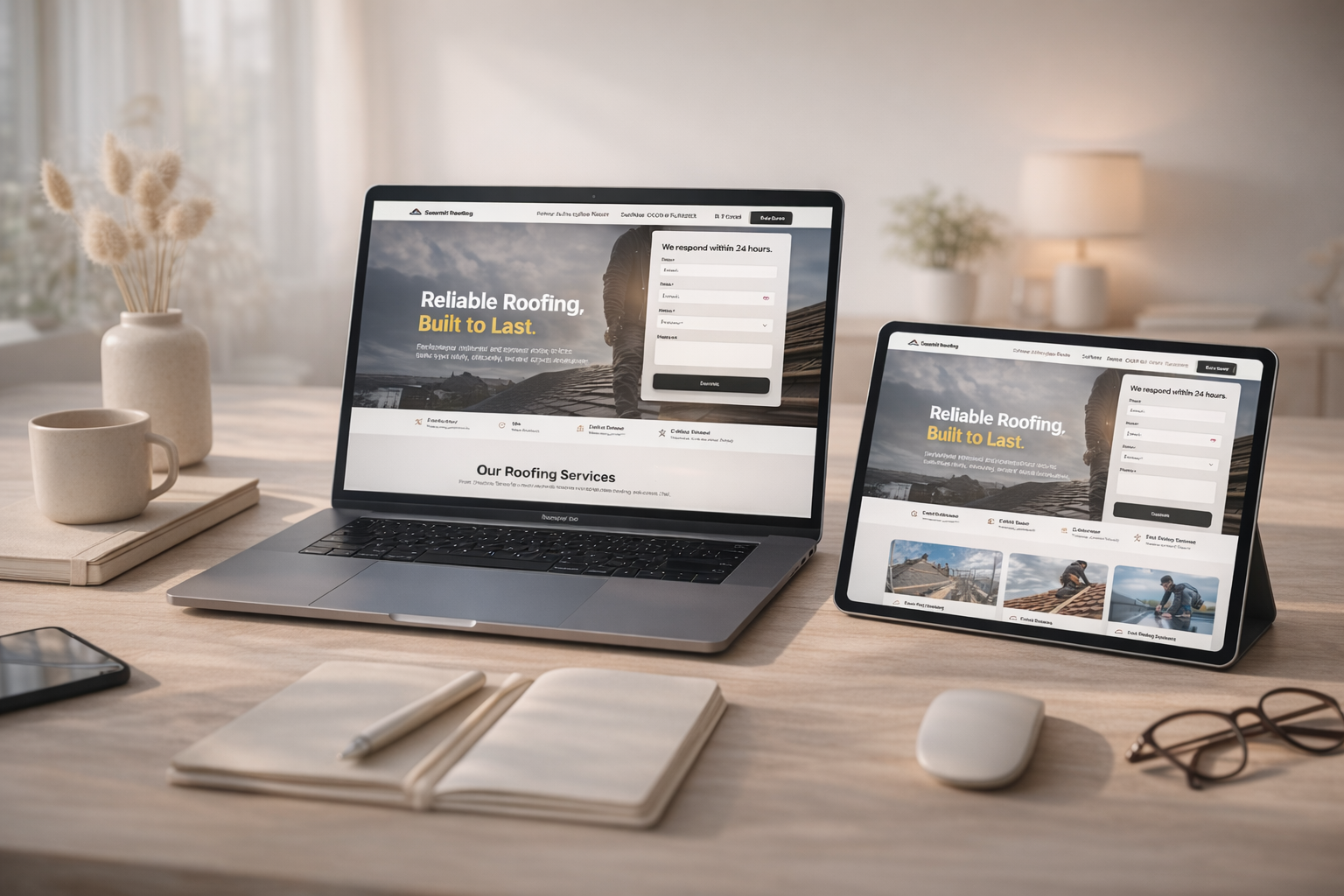
Structured templates solve the hardest part first — architecture → Roofing template
Instead of deciding where everything goes, businesses start with:
• Defined service pages
• Built-in enquiry flow
• Editable service areas
• Consistent content blocks
• Mobile-first layouts
The result is faster launch and better long-term maintainability.
When Businesses Need More Than Templates
As operations grow, structure becomes even more important.
That’s when businesses move toward:
• Client dashboards
• Booking workflows
• Internal tools
• Self-hosted CRMs → CRMs & Dashboards category
The same principle applies: clarity first, features second.
Final Thoughts
A professional website isn’t one that looks modern.
It’s one that removes friction.
When visitors understand what you do, where you work and how to contact you — enquiries follow naturally.
Structure creates that clarity.
Design makes it easier to trust.
Both matter, but they aren’t equal.